Spatial Technologist & Scenographer · MAS ETH DFAB Alumnus
Scenography is not interior decoration. It is spatial choreography.
You do not simply place exhibits inside a room. You control sightlines, light temperatures, material textures, sound reflections, and physical movement paths. Every meter of flooring either builds tension or releases it.
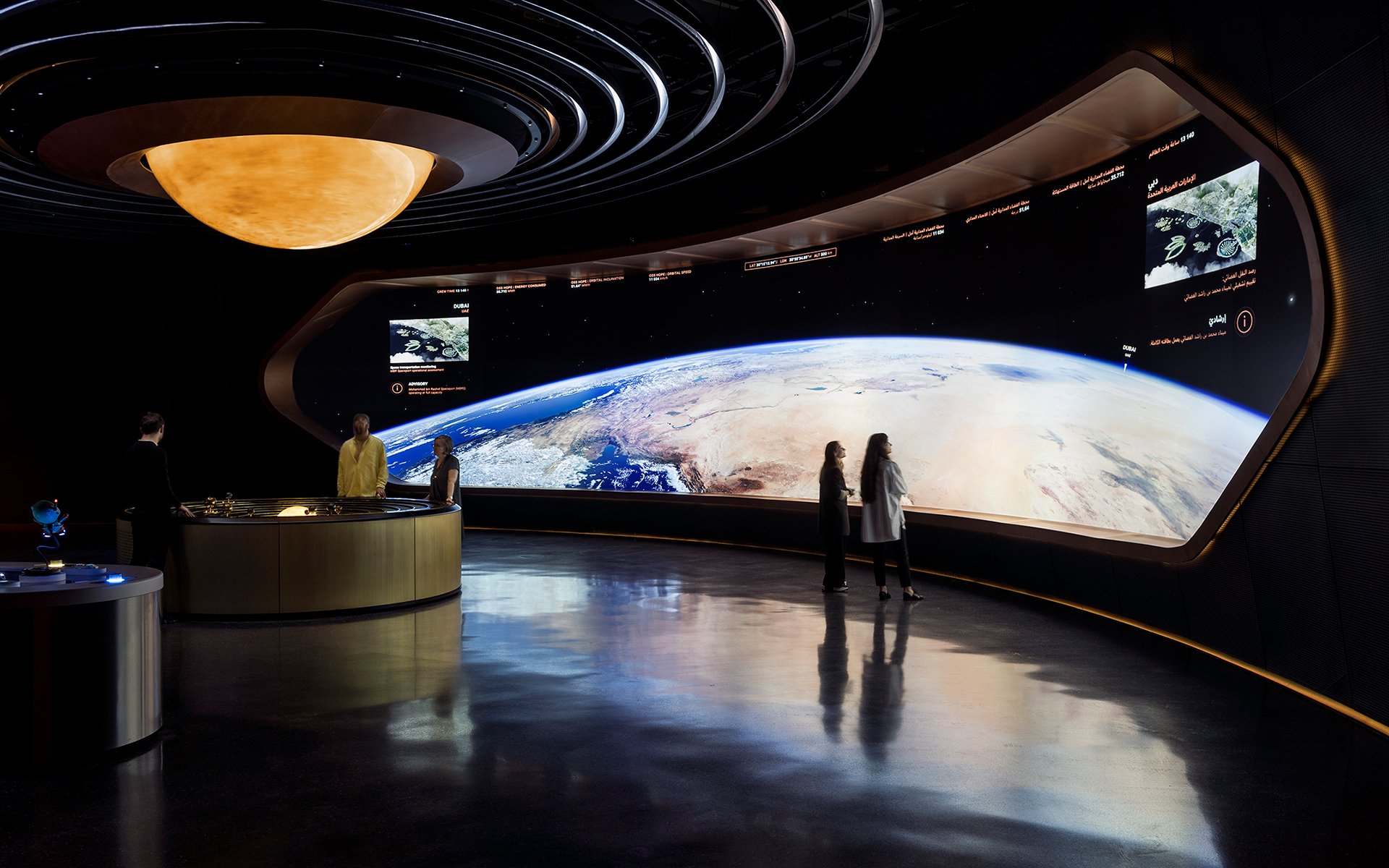
During my work at Atelier Brückner on the Museum of the Future in Dubai, the brief called for world-class cultural storytelling. Visitors on the Journey of the Pioneers exhibition floor needed to feel they had boarded an orbital station 600 kilometers above Earth. That requires architectural discipline. You calculate acoustic isolation, finish details, and screen edge blending with millimeter precision.
Too many modern exhibitions paste tablets onto pedestals and call the result interactive.
Visitors glance at a glowing screen, scroll for four seconds, and walk away bored. Physical objects hold weight and memory. The craft lies in connecting physical touch to computational depth.
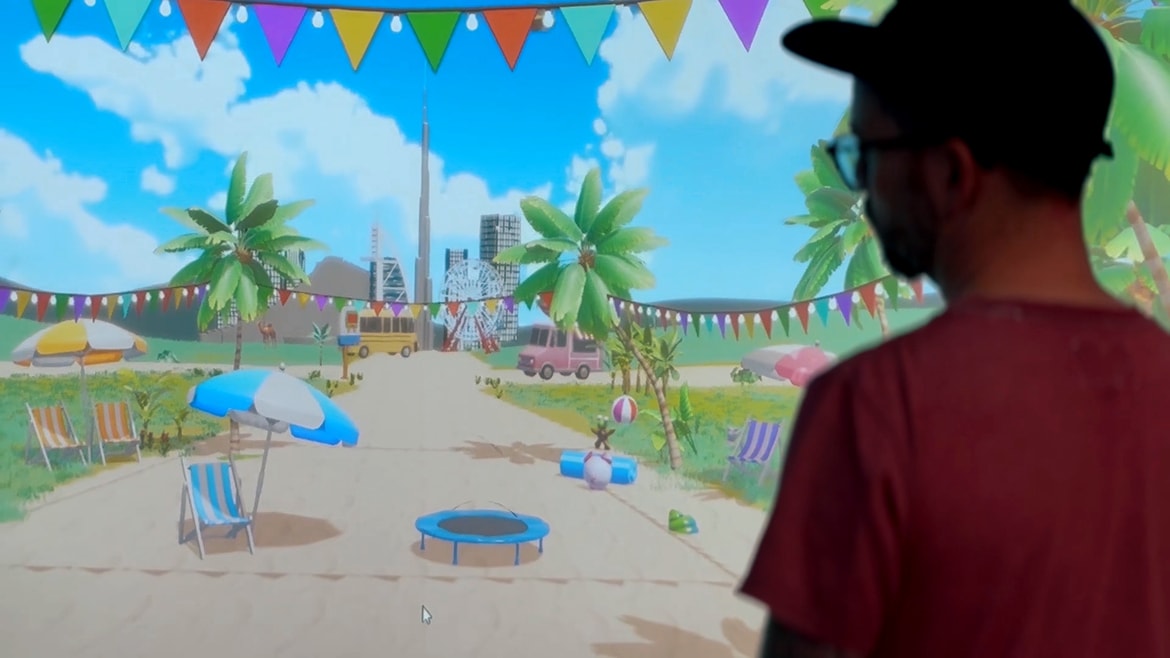
At the Kids Club for Jumeirah Beach Hotel in Dubai, we developed custom interactive edutainment stations. In one zone called Clay Nation, children sculpted physical shapes out of colored modeling clay. Once finished, they placed their sculpture into an optical 3D scanner housing.
Within five seconds, the scanner digitized their clay form, generated a 3D avatar mesh, and projected the creature directly into a projected wall ecosystem where it began interacting with other children's creations. At another station, custom Displax object-recognition tables tracked pucks across glass surfaces, teaching environmental physics through hands-on tactile play.
Children did not stare at a tablet. They shaped physical clay with their fingers and watched reality expand.
Tactile multi-user physical computing installation at Kids Club Jumeirah Beach Hotel Dubai
From digital fabrication to permanent architecture
Scenography and fabrication research feed each other directly.
During research at Gramazio Kohler Research at ETH Zurich, we built a human-guided robotic plastering system. An operator wearing an XR headset sketched acoustic relief patterns onto wall surfaces in three dimensions. An industrial robotic arm running custom toolpath algorithms followed the spatial strokes in real time, spraying mortar with calibrated thickness.
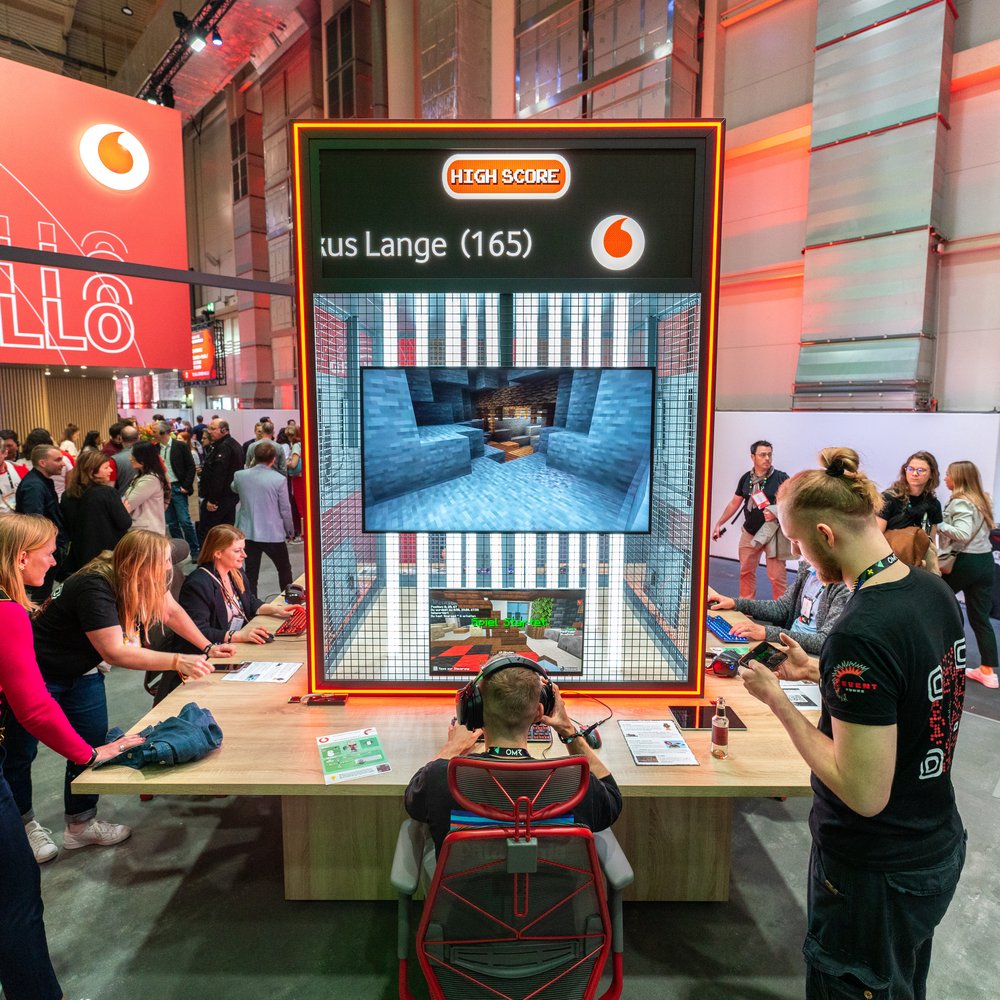
At the Vodafone Pavilion for OMR Hamburg, we transferred that computational geometry directly to temporary brand architecture. We designed a 1,000 square meter pavilion with a suspended kinetic canopy. Parametric ribs diffused addressable LED arrays, guiding thousands of visitors through product demonstrations and stage keynotes.
Suspended kinetic canopy and addressable lighting at the Vodafone Pavilion OMR Hamburg
Building for ten hours a day, 365 days a year
Festival pop-ups last two days. Museum scenography must survive 1,000 visitors every afternoon for ten years.
That requires strict engineering discipline:
No delicate exposed wiring: Sensor leads sit inside steel conduits and welded box sections.
Thermal management: Projector boxes and high-wattage LED controllers demand dedicated exhaust plenum airflows.
Fail-safe states: If a sensory network drops a packet, the installation gracefully defaults to a pleasant ambient animation rather than flashing an operating system error dialogue.
"When space, story, and hardware mesh cleanly, visitors forget about the technology entirely. They simply experience wonder."
Frequently Asked Questions
What is the primary role of an architectural scenographer?↓
An architectural scenographer choreographs physical space, lighting, material textures, and interactive media to lead visitors through a spatial story. The role spans concept design (HOAI LPH 1-4), exhibition layout, showcase details, and technology integration.
How does robotic fabrication fit into modern scenography?↓
Robotic 3D printing and automated fabrication allow custom non-standard geometries, doubly-curved panels, and kinetic building skins to be manufactured without single-use molds, reducing fabrication waste while unlocking complex geometries.
What makes an interactive museum installation succeed?↓
Visitors must understand how to interact within 3 seconds without instruction placards. Robust hardware (industrial touch foils, optical tracking, solid-state controllers) ensures the installation runs 10 hours a day for years without crashing.